Toxic Technology – The Tech Bros and the Silicon Economy
Nigel Gallagher
For decades, Silicon Valley has been celebrated as the liberal frontier of innovation – a space where technological disruption coincided with progressive values, rainbow branding, and cosmopolitan ideals. The region projected itself as a meritocratic utopia. A place where coding marathons, open office spaces, and startup pitches were synonymous with freedom, creativity, and democratic participation. Venture capitalists and engineers alike presented their work as socially transformative, capable of ‘changing the world’ for the better while generating enormous wealth.
Yet beneath this polished surface lies a far more complex reality. In recent years, the Valley’s elite have shifted politically, increasingly aligning with authoritarian forces – most prominently Donald Trump and J.D. Vance – while lobbying aggressively against taxation, regulation, and collective labour protections. At Trump’s presidential inauguration in January the tech elite assembled in full view. Billionaire executives from Apple, Amazon, Google, and Meta paid handsomely for seats close to Donald Trump. Elon Musk — once heralded as the emblem of a greener, more progressive capitalism — punctuated the ceremony with a fascist salute.
The narrative of Silicon Valley as a bastion of liberalism or technological salvation masks the deeper structural dynamics behind its evolution: the region functions as the central node of the American economy, a site where technological innovation, surveillance, and behavioural manipulation converge to influence society, politics, and global markets.
Silicon Valley is not just a hub of private wealth; it is vital to the American economy and American power globally. Its leading firms – Apple, Microsoft, Amazon, Alphabet, Meta, and Nvidia – represent a disproportionate share of stock market value, technological innovation, and high-value employment. They drive domestic economic growth, control essential infrastructure for digital communication and logistics, and underpin U.S. strategic interests worldwide. AI, cloud computing, advanced microchips, and digital platforms all contribute to the country’s geopolitical and military influence. In effect, Silicon Valley operates as both an economic engine and a strategic pillar of American power.
This article examines Silicon Valley’s transformation from multiple angles. First, it situates the tech industry as a central driver of economic and geopolitical influence. Next, it explores surveillance capitalism, showing how past behaviour is extracted, commodified, and used to predict and shape future human actions.
Subsequent sections investigate the political turn toward MAGA, labour and AI, and the ecological consequences that underpin the tech economy. Finally, it argues that the rightward drift of Silicon Valley illustrates a broader structural truth: under capitalism, technology is not inherently emancipatory but is subordinated to the imperatives of profit, accumulation, and social control.
Silicon Economy
Silicon Valley is not merely a regional hub of innovation; it has become the beating heart of the American economy. The Magnificent Seven —Apple, Microsoft, Alphabet, Amazon, Meta, Nvidia, and Tesla—account for a disproportionate share of U.S. stock-market value and most of its economic energy[i]. In 2024 the Magnificent Seven’s earnings growth was about 36.9 percent compared to 7 percent for the rest of the S&P 500. Their stock market value is now an incredible $21.6 trillion or 38 percent of the total SP500. Over a decade, the share of the S&P held by this handful of tech firms has nearly tripled.
The Valley also functions as an engine of technological innovation. Breakthroughs in artificial intelligence, semiconductor design, cloud computing, and software architecture underpin entire sectors of the global economy. Logistics, healthcare, finance, and education are now dependent on infrastructures controlled and coordinated from California. Through these systems, Silicon Valley firms do more than supply technology—they shape the conditions under which production and exchange occur, setting global technical standards and governing how information and value circulate.
This control over digital infrastructure allows capital to reorganise production on a global scale. Apple’s relationship with Foxconn exemplifies this shift: manufacturing is outsourced to contractors, while Apple retains command over design, software, branding, and distribution—capturing the lion’s share of profits despite not producing the physical commodity itself. Cloud platforms such as Salesforce generalise this dynamic across the economy by owning the ‘digital means of production’—servers, software, and data architectures—on which other firms now depend. In both cases, value is extracted not through direct production but through control over the infrastructures that make production possible.[ii]
This infrastructural dominance also anchors American geopolitical power. The same technologies that structure global commerce—cloud networks, semiconductors, and AI systems—are integral to state functions, defence logistics, and intelligence operations. As a result, the boundary between private innovation and state power becomes increasingly blurred, embedding Silicon Valley at the core of U.S. economic and military supremacy.
Silicon Valley exemplifies the fusion of technological development and geopolitical influence. The result is a symbiotic system in which economic, technological, and political power reproduce one another on a global scale.[iii]
Surveillance Capitalism
The spectacular rise of many of the ‘Magnificent Seven’ corporations can be traced to the dot-com crash at the start of the twenty-first century. In the years preceding it, Silicon Valley was awash with speculative investment, funneling enormous sums into fragile and overvalued internet start-ups that ultimately imploded. When the bubble burst in 2000, investors insisted on business models capable of producing predictable returns, and it was in this context that companies such as Google—and later Facebook and Amazon—discovered the profitability of behavioural data extraction.
Initially, Google’s search engine generated little revenue; its value emerged only once the company learned to translate user activity—search queries, clicks, and dwell times—into behavioural surplus that could be monetised through targeted advertising. This innovation marked a structural shift in the digital economy: platforms began to treat human interaction itself as a resource to be captured, analysed, and commodified.
Yanis Varoufakis interprets this shift, and the subsequent rise of powerful tech oligarchs, as part of a rupture from capitalism itself, into something he calls Technofeudalism[iv]. He argues that user’s “online activity produces value for digital platforms, amounting to a new form of digital labour within a quasi-feudal system of extraction”. However, human behaviour and the data created does not generate surplus value in the classical Marxist sense; rather, it is appropriated as raw material or a ‘free gift from nature’—like timber or coal—which capital harvests, processes, and refines into profitable commodities. Users do not supply labour power but behavioural input that is transformed by capital into predictive products and advertising markets. In this light, this does not signal a decisive rupture from capitalism, but rather an intensification of accumulation, further extending the logic of commodification into the intimate domains of everyday life.
Google’s expanding ecosystem of physical products—the Pixel phone, Nest thermostats, smart speakers and wearables—forms a distributed infrastructure of capture. These devices embed surveillance capacity into the fabric of daily life. A smart thermostat does not merely regulate temperature; it records household rhythms of presence and absence. A smart speaker does not simply play music; it listens, catalogues, and learns from voice data. Even seemingly benign conveniences—navigation apps, fitness trackers, and digital assistants—convert private experience into continuous streams of behavioural surplus, feeding Google’s predictive systems.[v]
This expansion exemplifies what Marx described as the real subsumption of life under capital[vi]: not only the commodification of labour, but the restructuring of social interaction, communication, and leisure to serve capitalist accumulation.
The same systems that collect data are designed to nudge, guide, and reshape future activity. Platforms are optimised for emotional engagement: Facebook curates feeds to provoke affective response; TikTok fine-tunes its algorithm to hold users in ever-shorter feedback cycles.
This algorithmic logic does not simply reflect neutral computation but reproduces the structural biases and priorities of capitalist society. Algorithms internalise existing hierarchies of power and profitability, amplifying content that is reactionary or violent precisely because such material tends to drive engagement and, therefore, profit. As Justin Joque says in Revolutionary Mathematics “meaning reflects not the world as it is, but the world as it is profitable.”[vii]The result is a feedback system in which the algorithm’s apparent neutrality masks a deeply political process of selection and amplification—one that mirrors and intensifies the inequalities from which it draws value.
Attempts to regulate surveillance capitalism inevitably confront the fact that the industry itself is founded on a systematic invasion of privacy. Data extraction and privacy invasion are not an unintended by-product of the digital economy, but its organising principle. To curtail it would be to undermine the very conditions of profitability. Legal frameworks have proven incapable of keeping pace with the industry. Even where regulation has been enforced, the consequences have been minimal.
For instance, after Google was found to have illegally collected private Wi-Fi data such as passwords, search history and credit card information, through its Street View vehicles, the company faced minimal financial penalties in a number of jurisdictions. One such jurisdiction was in Germany where the state fined them a mere €145,000.[viii] Such outcomes reveal the limits of regulation when confronted with a mode of accumulation predicated on surveillance and extraction itself. The problem is not just the absence of regulation, but the impossibility of regulating an industry whose profitability depends upon the very practices it purports to constrain.
This impasse is an illustration of the mutually reinforcing relationship between Big Tech and the state, a dynamic in which corporate data infrastructures and governmental power operate in tandem rather than in opposition. The surveillance capacities developed for commercial purposes increasingly serve political, security, and military interests, while state protection and investment secure the conditions for corporate expansion.
The MAGA Turn
The political drift of Silicon Valley’s elite is encapsulated by the trajectory of Marc Andreessen, one of the Valley’s most prominent venture capitalists. Once a symbol of liberal modernisation—having supported Barack Obama and voted for Hillary Clinton—Andreessen broke decisively with the Democratic establishment by endorsing Donald Trump in 2024.[ix] As co-founder of Andreessen Horowitz, his influence extends across hundreds of start-ups in AI, crypto, and defence technology. His 2023, Techno-Optimist Manifesto rejected environmental limits, social constraint, and what he derided as 'pessimism’, instead glorifying technological acceleration and growth as civilisational imperatives.[x] This vision reframes capital accumulation as moral virtue and state regulation as existential threat.
One such threat came when the Democratic Party in the early 2020s began to - at least rhetorically - turn against its former partners. Under Lina Khan, the Biden Administration’s chair of the Federal Trade Commission (FTC), Washington mounted a rare challenge to Big Tech’s monopoly power. Khan, an antitrust scholar who rose to prominence with a paper critiquing Amazon[xi], attempted to assert public authority over the sprawling conglomerates that dominate online commerce and communication.[xii] Bringing forward lawsuits targeting Meta’s acquisition of virtual-reality firms, Amazon’s predatory pricing, and Microsoft’s dominance in cloud computing, this signaled a new willingness to challenge the Valley’s power.
To Andreessen and the tech elite, this heresy foreshadowed a decisive turn towards Trump. Indeed, Trump himself exclaimed: “they did desert [Biden]. They were all with him, every one of them, and now they are all with me.”
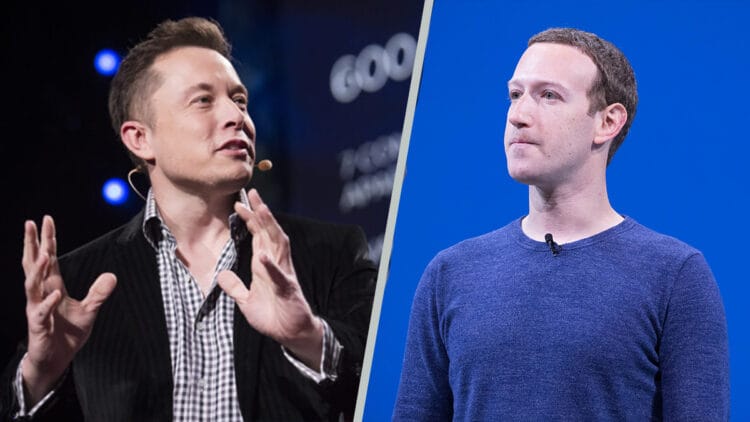
Figures such as Elon Musk, Peter Thiel, and Mark Zuckerberg represent evidence of the political turn to the right. Musk’s acquisition of Twitter (renamed X) reoriented a global communications infrastructure toward the far right under the guise of ‘free speech’. Since taking control of the platform, Musk has reinstated extremist accounts, promoted disinformation about immigration, climate change, and elections, and personally attacked journalists, academics, and regulators who question him. His recent appearance at the ‘Unite the Kingdom’ rally in Britain—where he echoed far-right talking points about ‘globalist elites’ and ‘woke tyranny’— shows his agenda laid-bare: Musk is not defending speech, but weaponising the language of freedom to legitimise a new era of right-wing authoritarianism and rising fascism.[xiii]
Zuckerberg, meanwhile, benefited directly from deregulation and political polarisation. Facebook amplified divisive content during the 2016 and 2020 US presidential elections for example. Facebook’s Cambridge Analytica scandal, exposed in 2018 by The Guardian and The Observer, revealed how the personal data of more than 87 million users was harvested and weaponised for targeted political advertising during the 2016 election.[xiv] The data analytics firm, funded by the billionaire, Robert Mercer, and tied to Trump’s then campaign strategist and fascist Steve Bannon, used psychological profiling to micro-target voters with manipulative, fear-based messages. Facebook initially denied and then downplayed its role, even as its platform continued to amplify polarising and conspiratorial content.
The episode illustrated not just corporate negligence but the structural alignment of Facebook’s business model with political manipulation: the more divisive and emotive the content, the greater the engagement—and hence, the profit.
Thiel, a major funder of Trump’s 2016 campaign and now a patron of figures such as J.D. Vance, has built an empire along with Alex Karp—Palantir Technologies—whose data analytics power military surveillance and policing infrastructures. Through Palantir and his political networks, Theil has long been embedded in the surveillance state and spearheaded Silicon Valley’s shift towards aiding US military operations. Palantir’s software has played a key role in U.S. immigration enforcement under both Trump Administrations, helping Immigration and Customs Enforcement (ICE) to identify and deport undocumented migrants using integrated databases and predictive analytics.[xv]The company has recently aided AI-assisted military operations for Israel’s genocide in Gaza, enabling the identification of bombing targets through algorithmic analysis of population data.[xvi]
Shyam Sankar, chief technology officer at Palantir was not overstating things when he wrote in The Free Press:
A decade ago, it would’ve been unthinkable for so many tech heavyweights to openly align with the U.S. military. Equally, it would’ve been out of character for the military to enlist the support of the nation’s business elite — much less to create a special corps so they could deploy their technical talents in service of the government. But a sea change has taken place in both places. . . Palantir was the forerunner in this effort.[xvii]
The Big Data firm has never shied away from supporting America’s pursuit of global military dominance. As Karp tells it, Palantir weathered nearly two decades of skepticism within Silicon Valley before helping forge a new consensus. In a recent interview, Karp remarked
We were very controversial, and that’s changed a lot — partly because people realized it was wrong, and quite frankly, if somebody makes a lot of money on something, then it must be right. So, we’ve changed the world by humiliating people and getting rich. It’s the most effective way for social change [to happen]: humiliate your enemy and make them poorer.[xviii]
An example of the ‘enemies’ Karp refers to are some of the tech workers at Google. In 2017, Google secured a contract for the U.S. military’s Project Maven, an initiative to integrate artificial intelligence into battlefield operations. More than 3000 workers signed an open letter urging CEO Sundar Pichai to cancel the deal, rejecting what they described as 'the business of war.[xix] Google eventually withdrew under pressure from their workers, but the contract was quickly taken up by Palantir, with Karp deriding Google’s refusal as a ‘loser position’.[xx] A more recent example of Silicon Valley’s deepening convergence with the coercive state can be seen in ICE’s new $5.7 million contract with Zignal Labs, a Silicon Valley firm providing AI-driven social media surveillance tools.[xxi] Zignal’s platform, already used by the Pentagon and Israeli military, analyses over eight billion posts daily to supply 'curated detection feeds’ for law enforcement. The system enables ICE to monitor online speech in real time, generating leads for immigration enforcement and political surveillance of activists.
This convergence between Big Tech and authoritarian populism is not merely ideological; it is structurally symbiotic. Trump and his allies offer the industry precisely what it desires—low taxation, minimal regulation and hostility to organised labour—while the platforms and technology in turn provide increased surveillance capabilities while amplifying and normalising reactionary discourse that destabilise democratic institutions.
The global dimension of this shift reflects the deeper crisis of capitalism itself. As the neoliberal consensus has fractured under the weight of financial crises, inequality, and ecological breakdown, elites have sought refuge in various forms of authoritarianism. Across the world the authoritarian turn is evident—from Trump in the United States to Modi in India, Meloni in Italy, and Milei in Argentina— Silicon Valley’s rightward drift maps neatly onto the global turn: an attempt to stabilise capitalist accumulation through reaction and authoritarianism.
Andreessen’s ideological pivot from Clintonite to Trumpist expresses the logic of a system in crisis. Silicon Valley’s elite see themselves not as innovators in an open society but as sovereign engineers of the future—tech overlords, freed from democratic constraint. The benefits to capital are material as well as ideological: soaring stock-market valuations, military contracts, weakened oversight, and political protection. What is presented as a revolt against bureaucracy and the ‘protection of free speech’ is in fact a mutually beneficial consolidation of corporate and political power.[xxii]
Artificial Valuations
In its early decades, Silicon Valley’s liberalism was not merely rhetorical but grounded in the material composition of its workforce. In the 1980s and 1990s many of these workers emerged from university campuses shaped by the counterculture of the late 1960s, carrying into the nascent tech industry a belief that computing could decentralise power, democratise knowledge, and make the world a better place. Their labour was highly skilled, in short supply, and central to the industry’s success so companies competed fiercely to attract and retain them. That early liberal ethos, the sense that technology could make the world fairer, was rooted in material reality: these workers were valuable, autonomous, and they knew it.
In the era of Trump, many tech workers continue to push back against their industry’s rightward shift. At Alphabet/Google, workers have organised walkouts over sexual harassment, opposed the company’s role in military projects, and pressured management to address climate and equity concerns.[xxiii] Indeed, this is one of the key reasons that both the Silicon Valley elites and the Trump administration are obsessed with artificial intelligence (AI). AI is not only a new frontier of profit and geopolitical influence; it is a managerial response to labour’s power and resistance. By automating code, design, and analysis, AI has the potential to weaken the bargaining position of skilled engineers.
The scale of investment is eye-watering. Meta plans to spend $65 billion on AI this year, Microsoft has allocated $80 billion, and Trump recently announced the Stargate Initiative — a partnership between Big Tech and the state — projected to channel half a trillion dollars into AI over the next five years. Investor enthusiasm for artificial intelligence has reached extraordinary levels. Major financial institutions such as banks, pension funds, hedge funds, and insurers—are treating AI as the foundation of a new era of growth.
The numbers currently bear out that confidence. AI-related firms have accounted for around 80 percent of all gains in U.S. stocks in 2025, driving a wave of speculative optimism that has helped sustain U.S. growth, even as other sectors stagnate. Foreign capital has poured into this boom as well with overseas investors channeling a record $290 billion into U.S. equities in the second quarter of 2025. This has brought foreign ownership of the American stock market to roughly 30 percent—the highest level since the Second World War. The U.S. economy has effectively become ‘one big bet on AI’. By traditional measures, the bet looks unsustainable. The current AI investment bubble, as measured by stock prices relative to the book value of companies, is roughly 17 times larger than the dot-com mania of 2000, and four times the size of the 2007 subprime mortgage bubble.
They bet that AI will eventually unlock a surge in productivity strong enough to justify these valuations. So far, however, there is little evidence that AI investment is delivering faster productivity growth. Paradoxically, it is the act of speculative investment itself—not the technology’s output—that is keeping the U.S. economy afloat. Nearly 40 percent of America’s real GDP growth last quarter came from tech-sector capital expenditure, most of it funnelled into AI data centres and infrastructure.[xxiv]
The AI boom, in other words, is sustaining the economy through its speculation, not through its substance. If the bet on AI fails; this could spell trouble for the US economy and for the Trump Administration.
Ecological Costs
The environmental costs of the AI boom are staggering. Far from being weightless or immaterial, large language models such as ChatGPT are among the most energy-intensive technologies ever created. Estimates suggest that as much as 700,000 liters of water may have been required to cool the servers that trained ChatGPT-3 at Microsoft’s data facilities.[xxv]
The material dependencies of the digital economy extend far beyond electricity. Minerals such as lithium and cobalt, commonly associated with electric vehicles, are also essential to the batteries that power data centres. Their extraction consumes vast quantities of water and often leaves behind heavy-metal pollution that undermines local ecosystems and threatens water security across the Global South. What Silicon Valley markets as ‘cloud computing’ is, in practice, an intensification of planetary extraction.
The energy burden is already reshaping U.S. infrastructure. Grid Strategies, a power-sector consultancy, projects that American electricity demand will grow by 4.7 percent over the next five years—nearly double previous forecasts—driven largely by AI and data-centre expansion. The Electric Power Research Institute estimates that data centres alone will account for 9 percent of total U.S. power demand by 2030, more than twice today’s levels. Meeting this demand will require either massive investment in renewable generation or, more likely, a delay in the planned retirement of coal and gas plants. In short, the supposed engines of a ‘green digital future’ are locking us deeper into the very systems of extraction and combustion that drive climate breakdown.
Conclusion
Silicon Valley’s story is often told as one of innovation, genius, and progress — but under capitalism, innovation is never neutral; it serves the imperatives of accumulation and domination. Far from transcending capitalism’s contradictions, Silicon Valley intensifies them, extending commodification into the most intimate and immaterial dimensions of life. Artificial intelligence, in particular, is not a path to freedom or abundance, but a weapon in the class war designed to deskill labour, depress wages, and reassert corporate control on the one hand and get ahead of China on the other.[xxvi]
A genuinely emancipatory future demands something far more profound: a revolutionary transformation of society itself — a break with private ownership and the profit motive that currently determine how technology is produced and deployed. Tech workers occupy a uniquely strategic position: they design, maintain, and operate the infrastructures on which the global economy depends. Collective action by tech workers has the potential to bring not only the U.S. economy but the global economy to a halt.
The seeds of that potential are already visible in the acts of resistance by tech workers against military contracts, by employees demanding accountability for surveillance and harassment, and by those pushing back against AI-driven job cuts.[xxvii] These moments hint at the latent power of a workforce that understands both the technical and social architecture of the capitalist system.
To make technology truly emancipatory, that power must be organised, politicised, and directed toward collective ends. The struggle is not to halt progress, but to liberate technology from capital — to reclaim it as a public good, democratically controlled and oriented toward human need rather than profit. Only through such a transformation can the immense productive capacities of the digital age be turned toward equality, sustainability, and freedom.
If Silicon Valley today stands as the command centre of global capitalism, then the path to a different future will begin in the same place — not in its boardrooms, but among its workers.
ENDNOTES
[i] https://economymiddleeast.com/largest-tech-companies-in-the-world-by-market-cap-in-2024/
[ii] https://mattcole.work/2018/02/23/platform-capitalism-and-the-value-form/
[iii] https://www.intereconomics.eu/contents/year/2025/number/2/article/big-tech-and-the-us-digital-military-industrial-complex.html
[iv] Varoufakis, Y. (2023) Technofeudalism: What Killed Capitalism. London: The Bodley Head.
[v] Zuboff, S. (2019) The Age of Surveillance Capitalism: The Fight for a Human Future at the New Frontier of Power. Profile Books.
[vi] Marx, Karl. Capital, Volume I. Trans. Ben Fowkes. London: Penguin, 1976. (Part IV, Ch. 16, “Absolute and Relative Surplus Value”).
[vii] Joque, Justin. Revolutionary Mathematics: Artificial Intelligence, Statistics and the Logic of Capitalism. London: Verso Books, 2022.
[viii] https://www.bbc.com/news/technology-24047235
[ix] https://www.nytimes.com/2025/01/17/opinion/marc-andreessen-trump-silicon-valley.html
[x] https://a16z.com/the-techno-optimist-manifesto/
[xi] Khan, L. M. (2017) ‘Amazon’s Antitrust Paradox’, The Yale Law Journal, 126(3), pp. 710–805. Available at: https://www.yalelawjournal.org/pdf/e.710.Khan.805_zuvfyyeh.pdf
[xii] https://www.theguardian.com/us-news/2024/mar/09/lina-khan-federal-trade-commission-antitrust-monopolies
[xiii] Financial Times (2025) ‘Elon Musk’s speech at the Unite the Kingdom rally sparks controversy,’ Financial Times, 15 March.
[xiv] https://www.theguardian.com/news/2018/mar/17/cambridge-analytica-facebook-influence-us-election
[xv] The Intercept (2017) ‘Palantir Has Secretly Been Helping ICE to Deport Undocumented Immigrants,’ 27 February. Available at: https://theintercept.com/2017/02/27/palantir-peter-thiel-trump-immigration/
[xvi] Business & Human Rights Resource Centre (2024) ‘Palantir allegedly enables Israel’s AI targeting amid Israel’s war in Gaza, raising concerns over war crimes.’ Available at: https://www.business-humanrights.org/de/neuste-meldungen/palantir-allegedly-enables-israels-ai-targeting-amid-israels-war-in-gaza-raising-concerns-over-war-crimes/
[xvii][xvii] The New York Times (2018) ‘Google Employees Resign in Protest Against Pentagon Contract’, The New York Times, 4 April. Available at: https://www.nytimes.com/2018/04/04/technology/google-letter-ceo-pentagon-project.html
[xviii][xviii] Day, M. (2025) ‘Silicon Valley Was Woke. Now They Want Blood.’ Jacobin, 20 June. Available at: https://jacobin.com/2025/06/silicon-valley-palantir-military-trump
[xix] The New York Times (2018) ‘Google Employees Resign in Protest Against Pentagon Contract’, The New York Times, 4 April. Available at: https://www.nytimes.com/2018/04/04/technology/google-letter-ceo-pentagon-project.html
[xx] Day, M. (2025) ‘Silicon Valley Was Woke. Now They Want Blood.’ Jacobin, 20 June. Available at: https://jacobin.com/2025/06/silicon-valley-palantir-military-trump
[xxi] https://jacobin.com/2025/10/ice-zignal-surveillance-social-media
[xxii] https://www.ft.com/content/62b1acf5-0eaa-4f4c-b3fa-40dbf563b5d2
[xxiii] https://www.nytimes.com/2025/01/29/technology/tampons-silicon-valley-workers-protest.html
[xxiv] Roberts, Michael (2024) ‘The AI Bubble and the US Economy’, Counterfire, 20 June. Available at: https://www.counterfire.org/article/the-ai-bubble-and-the-us-economy
[xxv] The Guardian (2023) ‘The AI industry’s booming — but at what environmental cost?’, The Guardian, 8 June. Available at: https://www.theguardian.com/technology/2023/jun/08/artificial-intelligence-industry-boom-environment-toll
[xxvi] The author is aware of the inter-imperialist dynamics of technology in the context of a rising China, but a full analysis of this dimension is beyond the scope of this article. It is, however, addressed elsewhere in this edition of the journal.
[xxvii] Jacobin (2025) ‘Tech Workers and the Rightward Turn in Silicon Valley’, Jacobin, February. Available at: https://jacobin.com/2025/02/tech-workers-silicon-valley-trump
Member discussion